A stroll in Oxford Botanic Garden makes us realise it somehow all comes down to culture and history in the end. This time: plants and literature. And a mischievous cat.
Using non-botanical themes in gardens can be very successful in attracting interest, also from people who don’t garden, or hardly visit nature parks. Perhaps they really enjoy reading books? Well, Oxford Botanic Garden knows how to entertain them.
Literary Garden
In Oxford we especially like the so-called Literary Garden, which is near the north wall. Here, we learn about plants that play important roles in well-known books.
This link to literature is no coincidence. Opposite Oxford Botanic Garden is Magdalene College. Writers at this college have a special relationship with their green neighbours. Oscar Wilde filled his room and writings with flowers. John Keats was delighted with the quiet greenery by the River Cherwell.
Tolkien
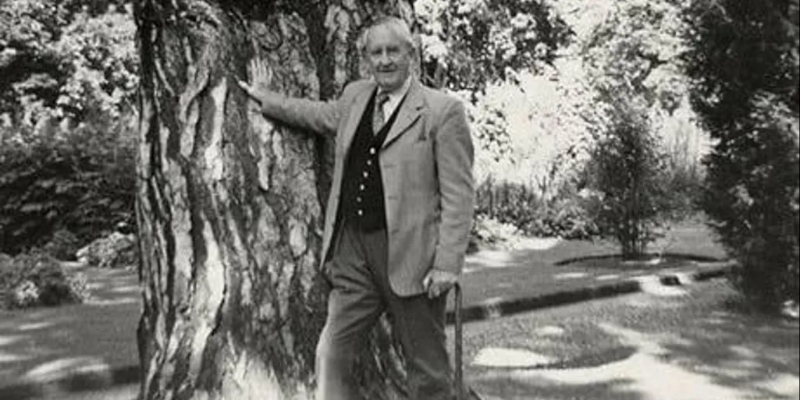
Take J.R.R. Tolkien’s black pine (Pinus nigra), which sadly had to be felled in 2014. We see a sapling now, planted in 2021 by King Charles III, that appears to be a descendant from the famous tree that used to grow here for more than 200 years. It has been suggested that the now deceased pine gave Tolkien his inspiration for the speaking trees in his The Lord of the Rings! When I listen carefully, the small pine seems to whisper ‘Welcome, you stranger!’ to me.
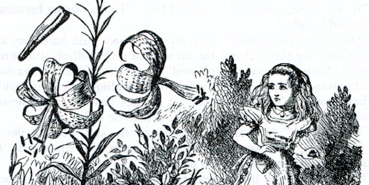
The Garden of Live Flowers
Sir John Tenniel
1871, wood-engraving by Dalziel
Illustration for Chapter 2 of Lewis Carroll’s Through the Looking Glass
Source: https://victorianweb.org/art/illustration/tenniel/lookingglass/2.1.html
Carroll
A special part of the literature walk is devoted to Lewis Carrol. The novelist and poet studied and worked in Oxford. He mentions many plants in his books.
I see a tiger lily (Lilium lancifolium), planted here to remind us of the speaking flowers in ‘Through the Looking-Glass’:
“O Tiger-lily!” said Alice, addressing herself to one that was waving itself gracefully about in the wind, “I wish you could talk!”
“We can talk,” said the Tiger-lily, “when there’s anybody worth talking to.”
In my case, the lily maintains a state of silence. Apparently, I’m not worth talking to … Or is March just too early for this summer and autumn flowering beauty?
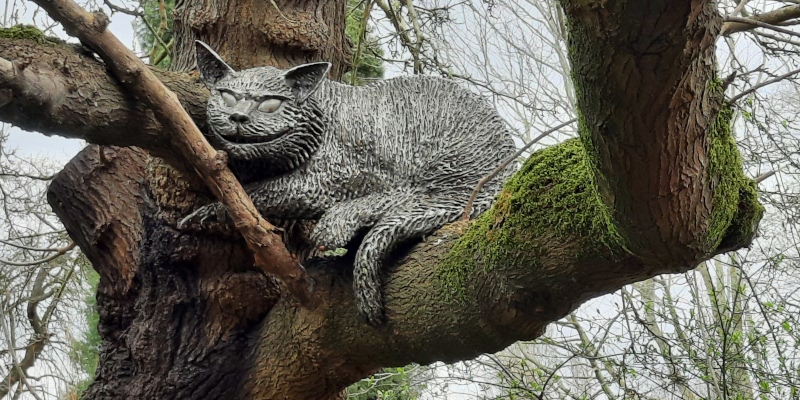
I also discover the famous Cheshire Cat, popularized by Carroll in Alice’s Adventures in Wonderland and known for its distinctive mischievous grin. Look at the picture above. He’s up in a tree and I’m glad he is! Although I’ve had pet cats for decades, I don’t think Cheshire Cat and me have a chance of becoming friends.
Christie
She was the best selling detective novelist in her times. She wrote many of her books at her Oxfordshire home. My father used to collect her books. Now that he’s passed away, I’m the proud owner of this collection written by Agatha Mary Clarissa Miller. I’m talking about Agatha Christie, of course.
At her work in a London pharmacy, Christie picked up knowledge of healing and poisonous plants that she later gave to Hercule Poirot and Miss Marple, who used it to solve murders! A few of those plant species have been planted here. We read their name signs, as it’s too early in the year to recognize or even spot most of them.
The evergreen yew (Taxus baccata) plays a famous role in A Pocket full of Rye. The seeds inside the berry contain a high concentration of taxine and are poisonous if chewed. In the book, a businessman dies after drinking his morning tea. An autopsy reveals the cause of death was poisoning by taxine.
The 4:50 Train from Paddington is another popular detective novel by Agatha Christie. In this book, we meet the monks hood (Aconitum napellus). The plant should be somewhere in this bed.
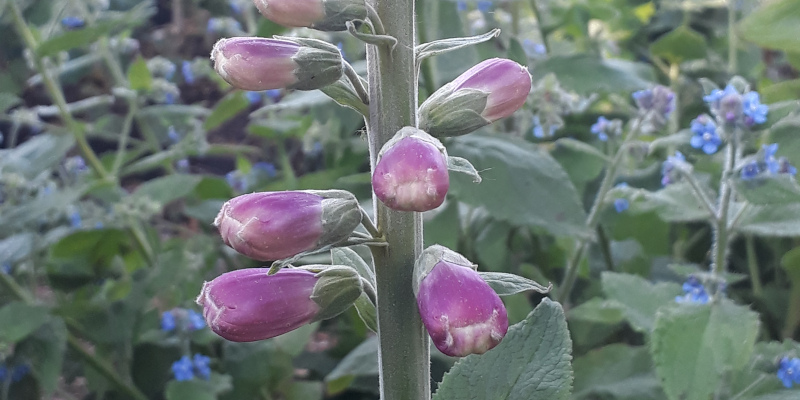
As a gardener, you may know that the foxglove (Digitalis purpurea) is a poisonous plant. But don’t worry. Just don’t eat them. Plant and enjoy them! The foxglove plays an important role in An Appointment with Death. So we discover a foxglove rosette here, too.
Notice
On the day of our visit, the sounds of Oxford Botanical Garden were overwhelming. The garden maintenance team had chosen this precise moment to produce a lot of noise.
No doubt, their machines did necessary work. However, unlike the production teams of Morse, Endeavor, and other famous TV detective series shot in this old city, your Discutafel podcaster was not in the position to clear the streets and gardens of unwanted stimuli. So we ended up with podcast recordings we eventually had to lay aside.
Therefore, we take you on a very silent stroll through the garden by publishing these blogs. Please note, we describe here the situation during our visit in March 2024. We refer to the garden’s website for updates.
How to get there
Oxford Botanic Garden can easily be reached by train. It’s entrance is on High Street, just a 20 minutes walk from the station. That is, when you’re not distracted by the beautiful shops and historic buildings in the city!
Links
- Literary trail (University of Oxford Botanic Garden & Arboretum)
- From Tolkien’s favourite tree to a royal sapling (BBC, 15-12-25)
- The Garden of live Flowers (The Victorian Web)