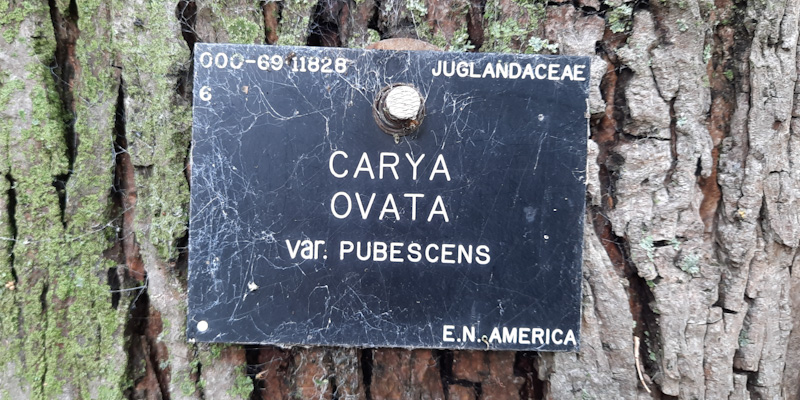
In botanical gardens you might see many signs witch mention Latin plant names. Where do these names come from, and why not using just the common names in your own language?
At one time, botanists used long descriptive names to make sure they were talking about the same plant. But then, in the 1700s, a mister Carl Linneus devised the binominal or two-name system.
Linneus was a Swedish botanist who lived in the 18th century. He is considered the founder of modern taxonomy, i.e. the science of classifying and naming things.
Two-name system of Latin plant names
Linneus’ two-name system is based on the principle of the genus and the species. For example, the wild daffodil is named Narcissus. That’s the genus. And pseudonarcissus, which is the species. It’s like your surname, followed by your first name. Like Darwin Charles 😉
Communication
With his system, Linneus gave a plant a unique identity in just two words. And these words also indicate its relationships with other plants. That makes it much easier to communicate with each other and do research on plant life.
There is more
Linneus’ two-name system is the foundation of taxonomy, but many garden plant names consist of more parts, and partly non-Latin. Read our blog on naming of plants to know more.
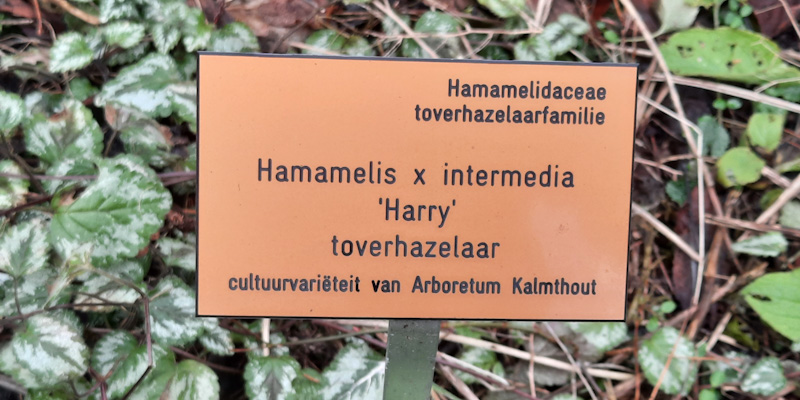
The sign in the top photograph shows a plant name consisting of a genus and ‘intermedia’. This Hamamelis or witch hazel is a hybrid of garden origin between the species H. japonica and H. mollis. Its Latin name refers to its intermediate appearance between those two species.